Molecular mechanisms and translational therapeutic potential of plant-derived bioactives in metabolic and neurodegenerative disorders
DOI:
https://doi.org/10.14719/tcb.9486Keywords:
Alzheimer’s disease, chronic inflammation, gut microbiota, metabolic disorders, molecular signaling, neurodegeneration, oxidative stress, phytochemicals, plant bioactives, translational therapeuticsAbstract
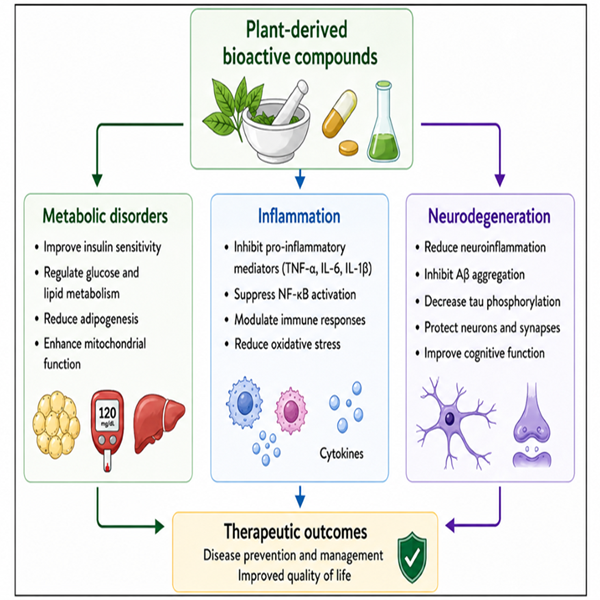
Metabolic disorders and neurodegenerative diseases have emerged as a set of interrelated disorders caused by inflammatory processes, oxidative stress, mitochondrial impairment and disruption of cellular signalling mechanisms. Metabolic disorders like obesity and type 2 diabetes, along with neurodegenerative diseases such as Alzheimer’s disease and Parkinson’s disease are characterized by common molecular mechanisms that include insulin resistance, neuroinflammation, dysregulation of energy metabolism and cellular damage. Natural bioactive compounds from plants have gained significant attention in scientific circles because of their potential to target several mechanisms at once. Phytochemicals like polyphenols, flavonoids, alkaloids, terpenoids and saponins exhibit antioxidant, anti-inflammatory, neuroprotective and metabolic activities. Bioactive compounds like curcumin, resveratrol, quercetin, epigallocatechin gallate and berberine modulate important signalling pathways like NF-?B, AMP-activated protein kinase (AMPK), PI3K/Akt, MAPK, Nrf2 and SIRT1. Nonetheless, even with promising experimental data, there are limitations associated with poor bioavailability, fast metabolism, unpredictable pharmacokinetics and lack of large-scale clinical studies. It is important to mention that some phytochemicals exhibit dose-dependent and context-dependent actions, which could suggest variations in efficacy depending on the condition being treated. There are novel approaches involving nanotechnology, bioenhancers, alteration of gut microbiota composition and precision nutrition approaches that have been proposed for solving these translational challenges. This review discusses the molecular mechanisms by which phytochemicals modulate metabolism, inflammation and neurodegeneration, but it also includes the existing limitations and contradictory results regarding these compounds.
Downloads
References
Hotamisligil GS. Inflammation and metabolic disorders. Nature. 2006;444(7121):860–7. https://doi.org/10.1038/nature05485
De Felice FG, Ferreira ST. Inflammation, defective insulin signalling and mitochondrial dysfunction as common molecular denominators connecting type 2 diabetes to Alzheimer disease. Diabetes. 2014;63(7):2262–72. https://doi.org/10.2337/db13-1954
Donath MY, Shoelson SE. Type 2 diabetes as an inflammatory disease. Nat Rev Immunol. 2011;11(2):98–107.https://doi.org/10.1038/nri2925
Glass CK, Saijo K, Winner B, Marchetto MC, Gage FH. Mechanisms underlying inflammation in neurodegeneration. Cell. 2010;140(6):918–34. https://doi.org/10.1016/j.cell.2010.02.016
Block ML, Zecca L, Hong JS. Microglia-mediated neurotoxicity: uncovering the molecular mechanisms. Nat Rev Neurosci. 2007;8(1):57–69. https://doi.org/10.1038/nrn2038
Halliwell B, Gutteridge JMC. Free radicals in biology and medicine. 5th ed. Oxford: Oxford University Press; 2015. https://doi.org/10.1093/acprof:oso/9780198717478.001.0001
Vauzour D, Rodriguez-Mateos A, Corona G, Oruna-Concha MJ, Spencer JPE. Polyphenols and human health: prevention of disease and mechanisms of action. Nutrients. 2010;2(11):1106–31. https://doi.org/10.3390/nu2111106
Crozier A, Jaganath IB, Clifford MN. Dietary phenolics: chemistry, bioavailability and effects on health. Nat Prod Rep. 2009;26(8):1001–43. https://doi.org/10.1039/b802662a
Liu RH. Health-promoting components of fruits and vegetables in the diet. Adv Nutr. 2013;4(3):384S-92S. https://doi.org/10.3945/an.112.003517
Hardie DG. AMPK: positive and negative regulation, and its role in whole-body energy homeostasis. Curr Opin Cell Biol. 2015;33:1–7. https://doi.org/10.1016/j.ceb.2014.09.004
Ma Q. Role of Nrf2 in oxidative stress and toxicity. Annu Rev Pharmacol Toxicol. 2013;53:401–26. https://doi.org/10.1146/annurev-pharmtox-011112-140320
Anand P, Kunnumakkara AB, Newman RA, Aggarwal BB. Bioavailability of curcumin: problems and promises. Mol Pharm. 2007;4(6):807–18. https://doi.org/10.1021/mp700113r
Scalbert A, Johnson IT, Saltmarsh M. Polyphenols: antioxidants and beyond. Am J Clin Nutr. 2005;81(1 Suppl):215S-17S. https://doi.org/10.1093/ajcn/81.1.215S
Middleton E Jr, Kandaswami C, Theoharides TC. The effects of plant flavonoids on mammalian cells: implications for inflammation, heart disease, and cancer. Pharmacol Rev. 2000;52(4):673–751. https://doi.org/10.1016/S0031-6997(24)01472-8
Baur JA, Sinclair DA. Therapeutic potential of resveratrol: the in vivo evidence. Nat Rev Drug Discov. 2006;5(6):493–506. https://doi.org/10.1038/nrd2060
Kong W, Wei J, Abidi P, Lin M, Inaba S, Li C, et al. Berberine is a novel cholesterol-lowering drug working through a unique mechanism distinct from statins. Nat Med. 2004;10(12):1344–51. https://doi.org/10.1038/nm1135
Aggarwal BB, Harikumar KB. Potential therapeutic effects of curcumin, the anti-inflammatory agent, against neurodegenerative, cardiovascular, pulmonary, metabolic, autoimmune and neoplastic diseases. Int J Biochem Cell Biol. 2009;41(1):40–59. https://doi.org/10.1016/j.biocel.2008.06.010
Wink M, editor. Functions and biotechnology of plant secondary metabolites. 2nd ed. Chichester: Wiley-Blackwell; 2010. https://doi.org/10.1002/9781444318876
Christensen LP. Ginsenosides: chemistry, biosynthesis, analysis, and potential health effects. Adv Food Nutr Res. 2009;55:1–99. https://doi.org/10.1016/S1043-4526(08)00401-4
Yin J, Xing H, Ye J. Efficacy of berberine in patients with type 2 diabetes mellitus. Metabolism. 2008;57(5):712–7. https://doi.org/10.1016/j.metabol.2008.01.013
Eid HM, Martineau LC, Saleem A, Muhammad A, Vallerand D, Benhaddou-Andaloussi A, et al. Stimulation of AMP-activated protein kinase and enhancement of basal glucose uptake in muscle cells by quercetin and quercetin glycosides, active principles of the antidiabetic medicinal plant Vaccinium vitis-idaea. Mol Nutr Food Res. 2010;54(7):991–1003. https://doi.org/10.1002/mnfr.200900218
Baur JA, Pearson KJ, Price NL, Jamieson HA, Lerin C, Kalra A, et al. Resveratrol improves health and survival of mice on a high-calorie diet. Nature. 2006;444(7117):337–42. https://doi.org/10.1038/nature05354
Thielecke F, Boschmann M. The potential role of green tea catechins in the prevention of metabolic syndrome. Phytochemistry. 2009;70(1):11–24. https://doi.org/10.1016/j.phytochem.2008.11.011
Panahi Y, Khalili N, Hosseini MS, Abbasinazari M, Sahebkar A. Lipid-modifying effects of adjunctive therapy with curcuminoids-piperine combination in patients with metabolic syndrome: results of a randomized controlled trial. Complement Ther Med. 2014;22(5):851–7.https://doi.org/10.1016/j.ctim.2014.07.006
Dulloo AG. The search for compounds that stimulate thermogenesis in obesity management: from pharmaceuticals to functional food ingredients. Obes Rev. 2011;12(10):866–83. https://doi.org/10.1111/j.1467-789X.2011.00909.x
Cardona F, Andrés-Lacueva C, Tulipani S, Tinahones FJ, Queipo-Ortuño MI. Benefits of polyphenols on gut microbiota and implications in human health. J Nutr Biochem. 2013;24(8):1415–22. https://doi.org/10.1016/j.jnutbio.2013.05.001
Medzhitov R. Origin and physiological roles of inflammation. Nature. 2008;454(7203):428–35. https://doi.org/10.1038/nature07201
Lawrence T. The nuclear factor NF-kappaB pathway in inflammation. Cold Spring Harb Perspect Biol. 2009;1(6):a001651. https://doi.org/10.1101/cshperspect.a001651
Kim HP, Son KH, Chang HW, Kang SS. Anti-inflammatory plant flavonoids and cellular action mechanisms. J Pharmacol Sci. 2004;96(3):229–45. https://doi.org/10.1254/jphs.CRJ04003X
Querfurth HW, LaFerla FM. Alzheimer's disease. N Engl J Med. 2010;362(4):329–44. https://doi.org/10.1056/NEJMra0909142
Yang F, Lim GP, Begum AN, Ubeda OJ, Simmons MR, Ambegaokar SS, et al. Curcumin inhibits formation of amyloid beta oligomers. J Biol Chem. 2005;280(7):5892–901. https://doi.org/10.1074/jbc.M404751200
Vingtdeux V, Giliberto L, Zhao H, Chandakkar P, Wu Q, Simon JE, et al. AMP-activated protein kinase signaling activation by resveratrol modulates amyloid-beta peptide metabolism. J Biol Chem. 2010;285(12):9100–13. https://doi.org/10.1074/jbc.M109.060061
Spencer JPE. Flavonoids and brain health: multiple effects underpinned by common mechanisms. Genes Nutr. 2009;4(4):243–50. https://doi.org/10.1007/s12263-009-0136-3
Patra JK, Das G, Fraceto LF, Campos EVR, Rodriguez-Torres MP, Acosta-Torres LS, et al. Nano based drug delivery systems: recent developments and future prospects. J Nanobiotechnology. 2018;16(1):71. https://doi.org/10.1186/s12951-018-0392-8
Gregor MF, Hotamisligil GS. Inflammatory mechanisms in obesity. Annu Rev Immunol. 2011;29:415–45. https://doi.org/10.1146/annurev-immunol-031210-101322
Calder PC, Ahluwalia N, Brouns F, Buetler T, Clement K, Cunningham K, et al. Dietary factors and low-grade inflammation in relation to overweight and obesity. Br J Nutr. 2011;106(S3):S5-–8. https://doi.org/10.1017/S0007114511005460
Libby P. Inflammatory mechanisms: the molecular basis of inflammation and disease. Nutr Rev. 2007;65(S3):S140–6. https://doi.org/10.1111/j.1753-4887.2007.tb00352.x
González-Gallego J, García-Mediavilla MV, Sánchez-Campos S, Tuñón MJ. Fruit polyphenols, immunity and inflammation. Br J Nutr. 2010;104(S3):S15–27. https://doi.org/10.1017/S0007114510003910
Gupta SC, Sundaram C, Reuter S, Aggarwal BB. Inhibiting NF-kappaB activation by small molecules as a therapeutic strategy. Biochim Biophys Acta. 2010;1799(10-12):775–87. https://doi.org/10.1016/j.bbagrm.2010.05.004
Seibert K, Zhang Y, Leahy K, Hauser S, Masferrer J, Perkins W, et al. Pharmacological and biochemical demonstration of the role of cyclooxygenase 2 in inflammation and pain. Proc Natl Acad Sci U S A. 1994;91(25):12013–7. https://doi.org/10.1073/pnas.91.25.12013
Kim JS, Jobin C. The flavonoid luteolin prevents lipopolysaccharide-induced NF-kappaB signalling and gene expression by blocking IkappaB kinase activity in intestinal epithelial cells and bone-marrow derived dendritic cells. Immunology. 2005;115(3):375–87. https://doi.org/10.1111/j.1365-2567.2005.02156.x
Przedborski S, Vila M, Jackson-Lewis V. Neurodegeneration: what is it and where are we? J Clin Invest. 2003;111(1):3–10. https://doi.org/10.1172/JCI200317522
Gao X, Cassidy A, Schwarzschild MA, Rimm EB, Ascherio A. Habitual intake of dietary flavonoids and risk of Parkinson disease. Neurology. 2012;78(15):1138–45. https://doi.org/10.1212/WNL.0b013e31824f7fc4
Mythri RB, Bharath MMS. Curcumin: a potential neuroprotective agent in Parkinson's disease. Curr Pharm Des. 2012;18(1):91–9. https://doi.org/10.2174/138161212798918995
Barnham KJ, Masters CL, Bush AI. Neurodegenerative diseases and oxidative stress. Nat Rev Drug Discov. 2004;3(3):205–14. https://doi.org/10.1038/nrd1330
Scapagnini G, Davinelli S, Drago F, De Lorenzo A, Oriani G. Antioxidants as antidepressants: fact or fiction? CNS Drugs. 2012;26(6):477–90. https://doi.org/10.2165/11633190-000000000-00000
Rayalam S, Della-Fera MA, Baile CA. Phytochemicals and regulation of the adipocyte life cycle. J Nutr Biochem. 2008;19(11):717–26. https://doi.org/10.1016/j.jnutbio.2007.12.007
Hanhineva K, Törrönen R, Bondia-Pons I, Pekkinen J, Kolehmainen M, Mykkänen H, et al. Impact of dietary polyphenols on carbohydrate metabolism. Int J Mol Sci. 2010;11(4):1365–402. https://doi.org/10.3390/ijms11041365
Williamson G. The role of polyphenols in modern nutrition. Nutr Bull. 2017;42(3):226–35. https://doi.org/10.1111/nbu.12278
Aggarwal BB, Sung B. Pharmacological basis for the role of curcumin in chronic diseases. Trends Pharmacol Sci. 2009;30(2):85–94. https://doi.org/10.1016/j.tips.2008.11.002
Mandel S, Weinreb O, Amit T, Youdim MBH. Cell signaling pathways in the neuroprotective actions of polyphenols. Free Radic Biol Med. 2004;37(3):304–17. https://doi.org/10.1016/j.freeradbiomed.2004.04.012
Hardie DG. AMP-activated protein kinase: maintaining energy homeostasis at the cellular and whole-body levels. Annu Rev Nutr. 2014;34:31–55. https://doi.org/10.1146/annurev-nutr-071812-161148
Vauzour D. Dietary polyphenols as modulators of brain functions: biological actions and molecular mechanisms underpinning their beneficial effects. Oxid Med Cell Longev. 2012;2012:914273. https://doi.org/10.1155/2012/914273
Halliwell B. Oxidative stress and neurodegeneration: where are we now? J Neurochem. 2006;97(6):1634–58. https://doi.org/10.1111/j.1471-4159.2006.03907.x
Maiese K, Chong ZZ, Shang YC, Wang S. Targeting disease through novel pathways of apoptosis and autophagy. Expert Opin Ther Targets. 2012;16(12):1203–14. https://doi.org/10.1517/14728222.2012.719499
Spencer JPE, Vafeiadou K, Williams RJ, Vauzour D. Neuroinflammation: modulation by flavonoids and mechanisms of action. Mol Aspects Med. 2012;33(1):8397. https://doi.org/10.1016/j.mam.2011.10.016
Anand P, Thomas SG, Kunnumakkara AB, Sundaram C, Harikumar KB, Sung B, et al. Biological activities of curcumin and its analogues. Biochem Pharmacol. 2008;76(11):1590–611. https://doi.org/10.1016/j.bcp.2008.08.008
Ferreira MPS, Martins JP, Hirabara SM. Resveratrol and physical activity: pharmacological and physiological interactions. Nutrients. 2015;7(8):6473–91.
Rehman K, Akash MSH. Mechanisms of inflammatory responses and development of insulin resistance: how are they interlinked? J Biomed Sci. 2016;23(1):87.https://doi.org/10.1186/s12929-016-0303-y
Puranik N, Yadav SK. Nanomedicine in the treatment and management of metabolic disorders. J Drug Deliv Sci Technol. 2021;61:102287.
Outeiro TF, Giorgini F. Yeast as a drug discovery platform in Huntington's and Parkinson's diseases. Biotechnol J. 2006;1(3):258–69. https://doi.org/10.1002/biot.200500043
Lewandowska U, Szewczyk K, Hrabec E, Janecka A, Gorlach S. Overview of metabolism and bioavailability enhancement of polyphenols. J Agric Food Chem. 2013;61(50):12183–99.https://doi.org/10.1021/jf404439b
Ferrari N, Tosetti F, De Flora S, Donatelli F, Sogno I, Noonan DM, et al. Diet-derived phytochemicals: from cancer chemoprevention to cardio-oncological prevention. Curr Drug Targets. 2011;12(13):1909–24. https://doi.org/10.2174/138945011798184227
Ahmed MG, Subramaniyan V, Nag S, Mohapatra RK, Chandran D, Sharma P, et al. Phytopharmaceuticals for neurological disorders: current scenario and future prospects. Front Pharmacol. 2023;14:1182746.
Zhang W, Akhtar F, Sun J. Emerging nanoformulations for phytochemical delivery in neurodegenerative disorders. Nanomedicine. 2024;48:102641.
Calderón-Garcidueñas L, Franco-Lira M, Torres-Jardón R, Henriquez-Roldán C, Barragán-Mejía G, Valencia-Salazar G, et al. Oxidative stress and neuroinflammation as key factors in the pathogenesis of neurodegenerative diseases. Toxicol Pathol. 2013;41(2):161–75. https://doi.org/10.1177/0192623308329340
Roberts CK, Sindhu KK. Oxidative stress and metabolic syndrome. Life Sci. 2009;84(21-22):705–12. https://doi.org/10.1016/j.lfs.2009.02.026
Uttara B, Singh AV, Zamboni P, Mahajan RT. Oxidative stress and neurodegenerative diseases: a review of upstream and downstream antioxidant therapeutic options. Curr Neuropharmacol. 2009;7(1):65–74. https://doi.org/10.2174/157015909787602823
Bellezza I, Giambanco I, Minelli A, Donato R. Nrf2-Keap1 signaling in oxidative and reductive stress. Biochim Biophys Acta Mol Cell Res. 2018;1865(5):721–33.https://doi.org/10.1016/j.bbamcr.2018.02.010
Kaspar JW, Niture SK, Jaiswal AK. Nrf2:INrf2 (Keap1) signaling in oxidative stress. Free Radic Biol Med. 2009;47(9):1304–9. https://doi.org/10.1016/j.freeradbiomed.2009.07.035
Loboda A, Damulewicz M, Pyza E, Jozkowicz A, Dulak J. Role of Nrf2/HO-1 system in development, oxidative stress response and diseases: an evolutionarily conserved mechanism. Cell Mol Life Sci. 2016;73(17):3221–47.https://doi.org/10.1007/s00018-016-2223-0
Lagouge M, Argmann C, Gerhart-Hines Z, Meziane H, Lerin C, Daussin F, et al. Resveratrol improves mitochondrial function and protects against metabolic disease by activating SIRT1 and PGC-1alpha. Cell. 2006;127(6):1109–22. https://doi.org/10.1016/j.cell.2006.11.013
Forman HJ, Zhang H. Targeting oxidative stress in disease: promise and limitations of antioxidant therapy. Nat Rev Drug Discov. 2021;20(9):689–709. https://doi.org/10.1038/s41573-021-00233-1
Nunnari J, Suomalainen A. Mitochondria: in sickness and in health. Cell. 2012;148(6):1145–59. https://doi.org/10.1016/j.cell.2012.02.035
Tönnies E, Trushina E. Oxidative stress, synaptic dysfunction, and Alzheimer's disease. J Alzheimers Dis. 2017;57(4):1105–21.https://doi.org/10.3233/JAD-161088
Renaud J, Martinoli MG. Resveratrol as a protective molecule for neuroinflammation: a review of mechanisms. Curr Pharm Biotechnol. 2014;15(4):318–29. https://doi.org/10.2174/1389201015666140617101332
Dias V, Junn E, Mouradian MM. The role of oxidative stress in Parkinson's disease. J Parkinsons Dis. 2013;3(4):461–91. https://doi.org/10.3233/JPD-130230
Dexter DT, Jenner P. Parkinson disease: from pathology to molecular disease mechanisms. Free Radic Biol Med. 2013;62:132–44. https://doi.org/10.1016/j.freeradbiomed.2013.01.018
Mandel SA, Amit T, Weinreb O, Youdim MBH. Understanding the broad-spectrum neuroprotective action profile of green tea polyphenols in aging and neurodegenerative diseases. J Alzheimers Dis. 2011;25(2):187–208. https://doi.org/10.3233/JAD-2011-101803
Persson T, Popescu BO, Cedazo-Minguez A. Oxidative stress in Alzheimer's disease: why did antioxidant therapy fail? Oxid Med Cell Longev. 2014;2014:427318.https://doi.org/10.1155/2014/427318
D'Archivio M, Filesi C, Varì R, Scazzocchio B, Masella R. Bioavailability of the polyphenols: status and controversies. Int J Mol Sci. 2010;11(4):1321–42. https://doi.org/10.3390/ijms11041321
Bouayed J, Bohn T. Exogenous antioxidants-double-edged swords in cellular redox state: health beneficial effects at physiologic doses versus deleterious effects at high doses. Oxid Med Cell Longev. 2010;3(4):228–37. https://doi.org/10.4161/oxim.3.4.12858
Del Rio D, Rodriguez-Mateos A, Spencer JPE, Tognolini M, Borges G, Crozier A. Dietary (poly)phenolics in human health: structures, bioavailability, and evidence of protective effects against chronic diseases. Antioxid Redox Signal. 2013;18(14):1818–92. https://doi.org/10.1089/ars.2012.4581
Puglia C, Offerta A, Tirendi GG, Tarico MS, Curreri S, Bonina F, et al. Design of solid lipid nanoparticles for caffeine topical administration. Drug Deliv. 2016;23(1):36–40. https://doi.org/10.3109/10717544.2014.903011
Hewlings SJ, Kalman DS. Curcumin: a review of its effects on human health. Foods. 2017;6(10):92. https://doi.org/10.3390/foods6100092
Pardridge WM. Drug transport across the blood-brain barrier. J Cereb Blood Flow Metab. 2012;32(11):1959–72. https://doi.org/10.1038/jcbfm.2012.126
Pandey KB, Rizvi SI. Plant polyphenols as dietary antioxidants in human health and disease. Oxid Med Cell Longev. 2009;2(5):270–8. https://doi.org/10.4161/oxim.2.5.9498
Srinivasan K. Black pepper and its pungent principle-piperine: a review of diverse physiological effects. Crit Rev Food Sci Nutr. 2007;47(8):735–48. https://doi.org/10.1080/10408390601062054
Shoba G, Joy D, Joseph T, Majeed M, Rajendran R, Srinivas PS. Influence of piperine on the pharmacokinetics of curcumin in animals and human volunteers. Planta Med. 1998;64(4):353–6. https://doi.org/10.1055/s-2006-957450
Nelson KM, Dahlin JL, Bisson J, Graham J, Pauli GF, Walters MA. The essential medicinal chemistry of curcumin. J Med Chem. 2017;60(5):1620–37. https://doi.org/10.1021/acs.jmedchem.6b00975
Cox KHM, Pipingas A, Scholey AB. Investigation of the effects of solid lipid curcumin on cognition and mood in a healthy older population. J Psychopharmacol. 2015;29(5):642–51. https://doi.org/10.1177/0269881114552744
Ringman JM, Frautschy SA, Cole GM, Masterman DL, Cummings JL. A potential role of the curry spice curcumin in Alzheimer's disease. Curr Alzheimer Res. 2005;2(2):131–6. https://doi.org/10.2174/1567205053585882
Posadzki P, Watson L, Ernst E. Herb-drug interactions: an overview of systematic reviews. Br J Clin Pharmacol. 2013;75(3):603–18. https://doi.org/10.1111/j.1365-2125.2012.04350.x
Poljsak B, Šuput D, Milisav I. Achieving the balance between ROS and antioxidants: when to use the synthetic antioxidants. Oxid Med Cell Longev. 2013;2013:956792. https://doi.org/10.1155/2013/956792
Yadav VR, Prasad S, Sung B, Aggarwal BB. The role of curcumin in cancer therapy. Curr Pharm Des. 2011;17(3):19-206.
Torchilin VP. Multifunctional nanocarriers. Adv Drug Deliv Rev. 2012;64 Suppl:302–15. https://doi.org/10.1016/j.addr.2012.09.031
Danaei M, Dehghankhold M, Ataei S, Hasanzadeh Davarani F, Javanmard R, Dokhani A, et al. Impact of particle size and polydispersity index on the clinical applications of lipidic nanocarrier systems. Pharmaceutics. 2018;10(2):57. https://doi.org/10.3390/pharmaceutics10020057
Tsai YM, Chien CF, Lin LC, Tsai TH. Curcumin and its nano-formulation: the kinetics of tissue distribution and blood-brain barrier penetration. Int J Pharm. 2011;416(1):331–8. https://doi.org/10.1016/j.ijpharm.2011.06.030
Bozzuto G, Molinari A. Liposomes as nanomedical devices. Int J Nanomedicine. 2015;10:975–99. https://doi.org/10.2147/IJN.S68861
Semalty A, Semalty M, Rawat BS, Franceschi F. Supramolecular phospholipids-polyphenolics interactions: the PHYTOSOME strategy to improve the bioavailability of phytochemicals. Fitoterapia. 2010;81(5):306–14. https://doi.org/10.1016/j.fitote.2009.11.001
Danhier F, Ansorena E, Silva JM, Coco R, Le Breton A, Préat V. PLGA-based nanoparticles: an overview of biomedical applications. J Control Release. 2012;161(2):505–22. https://doi.org/10.1016/j.jconrel.2012.01.043
Saraiva C, Praça C, Ferreira R, Santos T, Ferreira L, Bernardino L. Nanoparticle-mediated brain drug delivery: overcoming blood-brain barrier to treat neurodegenerative diseases. J Control Release. 2016;235:34–47. https://doi.org/10.1016/j.jconrel.2016.05.044
Teleanu DM, Chircov C, Grumezescu AM, Teleanu RI. Blood-brain delivery methods using nanotechnology. Pharmaceutics. 2018;10(4):269. https://doi.org/10.3390/pharmaceutics10040269
Maiti P, Dunbar GL. Use of curcumin, a natural polyphenol for targeting molecular pathways in treating age-related neurodegenerative diseases. Int J Mol Sci. 2018;19(6):1637. https://doi.org/10.3390/ijms19061637
Ventola CL. Progress in nanomedicine: approved and investigational nanodrugs. P T. 2017;42(12):742–5
Fadeel B. Clear and present danger? Engineered nanoparticles and the immune system. Swiss Med Wkly. 2012;142:w13609. https://doi.org/10.4414/smw.2012.13609
Torchilin VP. Recent advances with liposomes as pharmaceutical carriers. Nat Rev Drug Discov. 2005;4(2):145–60. https://doi.org/10.1038/nrd1632
Cryan JF, O'Riordan KJ, Cowan CSM, Sandhu KV, Bastiaanssen TFS, Boehme M, et al. The microbiota-gut-brain axis. Physiol Rev. 2019;99(4):1877–2013. https://doi.org/10.1152/physrev.00018.2018
Cani PD, Delzenne NM. The role of the gut microbiota in energy metabolism and metabolic disease. Curr Pharm Des. 2009;15(13):1546–58. https://doi.org/10.2174/138161209788168164
Tremaroli V, Bäckhed F. Functional interactions between the gut microbiota and host metabolism. Nature. 2012;489(7415):242–9. https://doi.org/10.1038/nature11552
Cani PD, Amar J, Iglesias MA, Poggi M, Knauf C, Bastelica D, et al. Metabolic endotoxemia initiates obesity and insulin resistance. Diabetes. 2007;56(7):1761–72. https://doi.org/10.2337/db06-1491
Etxeberria U, Fernández-Quintela A, Milagro FI, Aguirre L, Martínez JA, Portillo MP. Impact of polyphenols and polyphenol-rich dietary sources on gut microbiota composition. J Agric Food Chem. 2013;61(40):9517–33. https://doi.org/10.1021/jf402506c
Carabotti M, Scirocco A, Maselli MA, Severi C. The gut-brain axis: interactions between enteric microbiota, central and enteric nervous systems. Ann Gastroenterol. 2015;28(2):203–9.
Bischoff SC, Barbara G, Buurman W, Ockhuizen T, Schulzke JD, Serino M, et al. Intestinal permeability-a new target for disease prevention and therapy. BMC Gastroenterol. 2014;14:189. https://doi.org/10.1186/s12876-014-0189-7
Sampson TR, Mazmanian SK. Control of brain development, function and behavior by the microbiome. Cell Host Microbe. 2015;17(5):565–76. https://doi.org/10.1016/j.chom.2015.04.011
Cardona F, Andrés-Lacueva C, Tulipani S, Tinahones FJ, Queipo-Ortuño MI. Benefits of polyphenols on gut microbiota and implications in human health. J Nutr Biochem. 2013;24(8):1415–22. https://doi.org/10.1016/j.jnutbio.2013.05.001
Feng W, Wang H, Zhang P, Gao C, Tao J, Ge Z, et al. Modulation of gut microbiota contributes to curcumin-mediated attenuation of hepatic steatosis in rats. Biochim Biophys Acta Gen Subj. 2017;1861(7):1801–12. https://doi.org/10.1016/j.bbagen.2017.03.017
Silva YP, Bernardi A, Frozza RL. The role of short-chain fatty acids from gut microbiota in gut-brain communication. Front Endocrinol (Lausanne). 2020;11:25. https://doi.org/10.3389/fendo.2020.00025
Nicholson JK, Holmes E, Kinross J, Burcelin R, Gibson G, Jia W, et al. Host-gut microbiota metabolic interactions. Science. 2012;336(6086):1262–7. https://doi.org/10.1126/science.1223813
Egbuna C, Kumar S, Ifemeje JC, Ezzat SM, Kaliyaperumal S. Phytochemistry, pharmacology and therapeutic applications of natural products. Apple Academic Press; 2020.
Ferguson LR. Nutrigenomics approaches to functional foods. J Am Diet Assoc. 2009;109(3):452–8. https://doi.org/10.1016/j.jada.2008.11.024
Ordovas JM, Ferguson LR, Tai ES, Mathers JC. Personalised nutrition and health. BMJ. 2018;361:k2173. https://doi.org/10.1136/bmj.k2173
Chen H, Engkvist O, Wang Y, Olivecrona M, Blaschke T. The rise of deep learning in drug discovery. Drug Discov Today. 2018;23(6):1241–50. https://doi.org/10.1016/j.drudis.2018.01.039
Hopkins AL. Network pharmacology: the next paradigm in drug discovery. Nat Chem Biol. 2008;4(11):682–90. https://doi.org/10.1038/nchembio.118
Hasin Y, Seldin M, Lusis A. Multi-omics approaches to disease. Genome Biol. 2017;18(1):83. https://doi.org/10.1186/s13059-017-1215-1
Kitano H. Systems biology: a brief overview. Science. 2002;295(5560):1662–4. https://doi.org/10.1126/science.1069492
Wagner H. Synergy research: approaching a new generation of phytopharmaceuticals. Fitoterapia. 2011;82(1):34–7. https://doi.org/10.1016/j.fitote.2010.11.016
Hewlings SJ, Kalman DS. Curcumin: a review of its effects on human health. Foods. 2017;6(10):92. https://doi.org/10.3390/foods6100092
Williamson EM. Synergy and other interactions in phytomedicines. Phytomedicine. 2001;8(5):401–9. https://doi.org/10.1078/0944-7113-00060
Downloads
Published
Issue
Section
License
Copyright (c) 2026 Keerthivasan Ragupathi, Sudarshan Ramanathan

This work is licensed under a Creative Commons Attribution 4.0 International License.