Phytochemical profile, mineral composition and antioxidant potential of Daucus carota aqueous extracts: A correlation study
DOI:
https://doi.org/10.14719/tcb.9459Keywords:
antioxidant activity, Daucus carota, mineral composition, phytochemical screening, principal component analysis, quantitative analysisAbstract
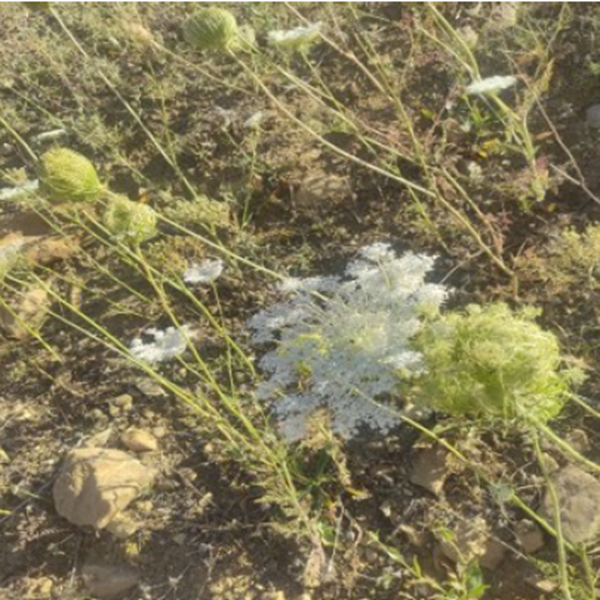
Daucus carota (Apiaceae), commonly known as “Sannariya” and is widely distributed in temperate and Mediterranean regions, particularly in Morocco. The aim of this study is to conduct mineralogical analysis, phytochemical investigations through aqueous extractions, essential oil extraction, phytochemical screening, quantification of phenolic compounds and evaluation of antioxidant activity using both H?O? and ferric reducing antioxidant power (FRAP) assays. Principal component analysis (PCA) was used to examine the correlation between antioxidant activity and the plant’s chemical composition. The results showed that the plant is very rich in minerals, particularly potassium (K) (117210), calcium (Ca) (13596.6), magnesium (Mg) (11525.1), sodium (Na) (6048.6), phosphorus (P) (5329.5) and iron (Fe) (2738.16) mg/kg of dry matter. The decocted exhibited the highest extraction yield (18.36 ± 0.14 %). Essential oil extraction limited to trace amounts. Phytochemical screening indicated that the plant is rich in flavonoids, catechic tannins, saponins, free quinones, sterols, anthraquinones and anthracenosides, while alkaloids and gallic tannins were absent. Quantification analysis showed that the decocted D. carota contained the highest levels of total polyphenols and catechic tannins, with 19.92 ± 0.08 µg GAE/mg E and 1.42 ± 0.10 µg CE/mg E, respectively, while the infused displayed the highest flavonoid content at 132.64 ± 0.57 µg QE/mg E. Similarly, the infused exhibited the strongest antioxidant potential in both H?O? and FRAP tests, with 10.22 ± 0.41 % and 64.24 ± 0.14 µg TE/mg E, respectively. Principal component analysis revealed a strong correlation between polyphenol, flavonoid contents and antioxidant activity. The findings demonstrate that D. carota is a rich source of bioactive compounds with potential for the development of pharmacologically relevant products.
Downloads
References
Kumar P. Valuation of medicinal plants for pharmaceutical uses. Curr Sci. 2004;86(7):930-7.
Sayed-Ahmad B, Talou T, Saad Z, Hijazi A, Merah O. The Apiaceae: ethnomedicinal family as source for industrial uses. Ind Crops Prod. 2017;109:661-71. https://doi.org/10.1016/j.indcrop.2017.09.027
Plunkett GM, Lowry PP II, Pinney SM, Sprenkle TA, Chandler GT. Recent advances in understanding Apiales and a revised classification. S Afr J Bot. 2004;70(3):371-81. https://doi.org/10.1016/S0254-6299(15)30220-9
Xu Z, Chang L. Apiaceae or Umbelliferae. In: Chen X, editor. Flora of China Illustrated. Singapore: Springer; 2017. https://doi.org/10.1007/978-981-10-5403-7_1
Tamokou JDD, Mbaveng AT, Kuete V. Antimicrobial activities of African medicinal spices and vegetables. In: Kuete V, editor. Medicinal Spices and Vegetables from Africa. Amsterdam: Elsevier; 2017. p. 207-37. https://doi.org/10.1016/B978-0-12-809286-6.00008-X
Kozhanova K, Alimanova A, Datkhayev U, Serikbayeva E, Kayupova F, Zhumalina K, et al. Unlocking the potential: exploring pharmacological properties from Apiaceae family. Pharmacia. 2025;72:1-14. https://doi.org/10.3897/pharmacia.72.e145193
Ismail J, Shebaby WN, Daher J, Boulos JC, Taleb R, Daher CF, et al. The wild carrot (Daucus carota): a phytochemical and pharmacological review. Plants (Basel). 2024;13(1):93. https://doi.org/10.3390/plants13010093
Arora M, Kiran B, Rani S, Rani A, Kaur B, Mittal N. Heavy metal accumulation in vegetables irrigated with water from different sources. Food Chem. 2008;111(4):811-5. https://doi.org/10.1016/j.foodchem.2008.04.049
Boulfia M, Lamchouri F, Senhaji S, Lachkar N, Bouabid K, Toufik H. Mineral content, chemical analysis, in vitro antidiabetic and antioxidant activities and antibacterial power of aqueous and organic extracts of Moroccan Leopoldia comosa (L.) Parl. bulbs. Evid Based Complement Alternat Med. 2021;2021:9932291. https://doi.org/10.1155/2021/9932291
Lachkar N, Lamchouri F, Bouabid K, Boulfia M, Senhaji S, Stitou M, et al. Mineral composition, phenolic content and in vitro antidiabetic and antioxidant properties of aqueous and organic extracts of Haloxylon scoparium aerial parts. Evid Based Complement Alternat Med. 2021;2021:9011168. https://doi.org/10.1155/2021/9011168
Lachkar N, Lamchouri F, Toufik H. Ethnopharmacological survey, mineral and chemical content, in vitro antioxidant and antibacterial activities of aqueous and organic extracts of Chamaerops humilis L. var. argentea André leaves. Biomed Res Int. 2022;2022:1091247.https://doi.org/10.1155/2022/1091247
Senhaji S, Lamchouri F, Boulfia M, Lachkar N, Bouabid K, Toufik H. Mineral composition, content of phenolic compounds and in vitro antioxidant and antibacterial activities of aqueous and organic extracts of the seeds of Peganum harmala L. S Afr J Bot. 2022;147:697-712. https://doi.org/10.1016/j.sajb.2022.03.005
Mahtal A, Lamchouri F, Toufik H. Mineral composition, phenolic content and antibacterial activity of aqueous and organic extracts of wild Morchella esculenta (L.) Pers. from the province of Taza, Morocco. Biochem Res Int. 2024;2024:6769243. https://doi.org/10.1155/bri/6769243
Bouabid K, Lamchouri F, Toufik H, Sayah K, Cherrah Y, My El Abbes F. Phytochemical screening and in vitro evaluation of alpha amylase, alpha glucosidase and beta galactosidase inhibition by aqueous and organic Atractylis gummifera L. extracts. Plant Sci Today. 2018;5(3):103-10. https://doi.org/10.14719/pst.2018.5.3.393
Bouhazama H, Lamchouri F, Toufik H. Phytochemical investigation and quantification of bioactive compounds of Rhamnus alaternus (L.). Trop J Drug Res. 2024;1(1):19-28. https://doi.org/10.26538/tjdr/v1i1.3
Senhaji S, Lamchouri F, Toufik H. Phytochemical content, antibacterial and antioxidant potential of endemic plant Anabasis aretioides Coss. & Moq. (Chenopodiaceae). Biomed Res Int. 2020;2020:6152932. https://doi.org/10.1155/2020/6152932
Singleton VL, Orthofer R, Lamuela-Raventós RM. Analysis of total phenols and other oxidation substrates and antioxidants by means of Folin-Ciocalteu reagent. In: Packer L, editor. Methods Enzymol. Vol. 299. San Diego: Academic Press; 1999. p. 152-78.https://doi.org/10.1016/S0076-6879(99)99017-1
Dewanto V, Wu X, Adom KK, Liu RH. Thermal processing enhances the nutritional value of tomatoes by increasing total antioxidant activity. J Agric Food Chem. 2002;50(10):3010-4. https://doi.org/10.1021/jf0115589
Julkunen-Tiitto R. Phenolic constituents in the leaves of northern willows: methods for the analysis of certain phenolics. J Agric Food Chem. 1985;33(2):213-7.https://doi.org/10.1021/jf00062a013
Ruch RJ, Cheng SJ, Klaunig JE. Prevention of cytotoxicity and inhibition of intercellular communication by antioxidant catechins isolated from Chinese green tea. Carcinogenesis. 1989;10(6):1003-8. https://doi.org/10.1093/carcin/10.6.1003
Benzie IF, Strain JJ. The ferric reducing ability of plasma (FRAP) as a measure of "antioxidant power": the FRAP assay. Anal Biochem. 1996;239(1):70-6. https://doi.org/10.1006/abio.1996.0292
Houston MC, Harper KJ. Potassium, magnesium, and calcium: their role in both the cause and treatment of hypertension. J Clin Hypertens (Greenwich). 2008;10(7 Suppl 2):3-11. https://doi.org/10.1111/j.1751-7176.2008.08575.x
Flynn A. The role of dietary calcium in bone health. Proc Nutr Soc. 2003;62(4):851-8. https://doi.org/10.1079/PNS2003301
Okamoto T. Effects of magnesium and calcium on muscle contractility and neuromuscular blockade produced by muscle relaxants and aminoglycoside. Masui. 1992;41(12):1910-22.
Bernal A, Zafra MA, Simón MJ, Mahía J. Sodium homeostasis, a balance necessary for life. Nutrients. 2023;15(2):395. https://doi.org/10.3390/nu15020395
Serna J, Bergwitz C. Importance of dietary phosphorus for bone metabolism and healthy aging. Nutrients. 2020;12(10):3001. https://doi.org/10.3390/nu12103001
McDermid JM, Lönnerdal B. Iron. Adv Nutr. 2012;3(4):532-3.https://doi.org/10.3945/an.112.002261
Sodamade A, Raimi SM, Owonikoko AD, Adebimpe AT. Nutritive evaluation, mineral composition and phytochemical analysis of leaf protein concentrates of Daucus carota. Int J Trend Sci Res Dev. 2019;3(5):767-72.
Hazrati S, Mousavi Z, Nicola S. Harvest time optimization for medicinal and aromatic plant secondary metabolites. Plant Physiol Biochem. 2024;212:108735. https://doi.org/10.1016/j.plaphy.2024.108735
Kim JS, Lim JH, Cho SK. Effect of antioxidant and anti-inflammatory on bioactive components of carrot (Daucus carota L.) leaves from Jeju Island. Appl Biol Chem. 2023;66(1):34. https://doi.org/10.1186/s13765-023-00786-2
Akune NAS, Rahmawati I, Sulaiman S. Antibacterial activity test of ethanol extract and fraction of carrot leaf (Daucus carota L.) against Staphylococcus aureus. J Multidisiplin Madani. 2024;4(3):458-63. https://doi.org/10.55927/mudima.v4i3.8604
Bekara A, Ait Hamadouche N, Kahloula K, Sadi N, Aoues A. Phytochemical study and antioxidant activity of the aqueous extract of Pimpinella anisum L. Alger J Nat Prod. 2016;4(3):299-307.
Özcan MM, Chalchat JC. Chemical composition of carrot seeds (Daucus carota L.) cultivated in Turkey: characterization of the seed oil and essential oil. Grasas Aceites. 2007;58(4):359-65.https://doi.org/10.3989/gya.2007.v58.i4.447
Dehghani L, Fattahi M, Ashrafi-Saeidlou S. Morpho-phytochemical screening and biological assessments of aerial parts of Iranian populations of wild carrot (Daucus carota L. subsp. carota). Sci Rep. 2025;15(1):12619. https://doi.org/10.1038/s41598-025-96965-w
Samadi M, Zainal Abidin Z, Yoshida H, Yunus R, Awang Biak DR. Toward higher oil yield and quality of essential oil extracted from Aquilaria malaccensis wood via the subcritical technique. Molecules. 2020;25(17):3872. https://doi.org/10.3390/molecules25173872
Moghaddam M, Mehdizadeh L. Chemistry of essential oils and factors influencing their constituents. In: Grumezescu AM, Holban AM, editors. Soft Chemistry and Food Fermentation. Amsterdam: Academic Press; 2017. p. 379-419. https://doi.org/10.1016/B978-0-12-811412-4.00013-8
Bhatti MZ, Ismail H, Kayani WK. Plant secondary metabolites: therapeutic potential and pharmacological properties. In: Secondary Metabolites-Trends and Reviews. London: IntechOpen; 2022.
Ayeni E, Ahmed A, Ibrahim G, Atinga V, Muhammad Z. Phytochemical, nutraceutical and antioxidant studies of the aerial parts of Daucus carota L. (Apiaceae). J HerbMed Pharmacol. 2018;7(1):68-73. https://doi.org/10.15171/jhp.2018.12
Choi SS, Lee JE, Lee HJ, Lee KA. Comparative evaluation of the antioxidant and immunomodulatory activities of carrot (Daucus carota L.) aerial parts and roots using different extraction methods. Foods. 2025;14(23):3993. https://doi.org/10.3390/foods14233993
Kalt W, Ryan DAJ, Duy JC, Prior RL, Ehlenfeldt MK, Kloet SP. Interspecific variation in anthocyanins, phenolics and antioxidant capacity among genotypes of highbush and lowbush blueberries (Vaccinium section Cyanococcus spp.). J Agric Food Chem. 2001;49(10):4761-7.https://doi.org/10.1021/jf010653e
Chandran R, Abrahamse H. Identifying plant-based natural medicine against oxidative stress and neurodegenerative disorders. Oxid Med Cell Longev. 2020;2020:8648742. https://doi.org/10.1155/2020/8648742
Alasalvar C, Grigor JM, Zhang D, Quantick PC, Shahidi F. Comparison of volatiles, phenolics, sugars, antioxidant vitamins and sensory quality of different colored carrot varieties. J Agric Food Chem. 2001;49(3):1410-6. https://doi.org/10.1021/jf000595h
Addi M, Elbouzidi A, Abid M, Tungmunnithum D, Elamrani A, Hano C. An overview of bioactive flavonoids from citrus fruits. Appl Sci (Basel). 2022;12(1):29. https://doi.org/10.3390/app12010029
Shebaby WN, El-Sibai M, Smith KB, Karam MC, Mroueh M, Daher CF. The antioxidant and anticancer effects of wild carrot oil extract. Phytother Res. 2013;27(5):737-44. https://doi.org/10.1002/ptr.4776
Rahim MA, Baharudin NA, Nazri IA, Mohamad S, Muazzam KAAR. Effect of different drying methods on the antioxidant properties of leaves of Centella asiatica. IOP Conf Ser Earth Environ Sci. 2021;756(1):012054. https://doi.org/10.1088/1755-1315/756/1/012054
Afsar T, Razak S, Khan MR, Mawash S, Almajwal A, Shabir M, et al. Evaluation of antioxidant, anti-hemolytic and anticancer activity of various solvent extracts of Acacia hydaspica R. Parker aerial parts. BMC Complement Altern Med. 2016;16(1):258. https://doi.org/10.1186/s12906-016-1240-8
Yadav M, Kumari S, Nagraj N, Sharma N, Bharati SL, Singh S, et al. Hydrogen peroxide scavenging by methanolic extracts of coriander: an in vitro antioxidant study. Pharm Drug Regul Aff J. 2025;8(1):162. https://doi.org/10.23880/pdraj-16000162
Isbilir SS, Sagiroglu A. Antioxidant potential of different dill (Anethum graveolens L.) leaf extracts. Int J Food Prop. 2011;14(4):894-902. https://doi.org/10.1080/10942910903474401
Qi K, Xia G, Huang G, Huang H. Extraction, chemical modification and antioxidant activities of Daucus carota polysaccharide. Chem Biol Drug Des. 2021;98(6):1098-103. https://doi.org/10.1111/cbdd.13968
Chemat F, Fabiano-Tixier AS, Abert Vian M, Allaf T, Vorobiev E. Solvent-free extraction. In: Ibáñez E, Cifuentes A, editors. Compr Anal Chem. Vol. 76. Amsterdam: Elsevier; 2017. p. 225-54.
Downloads
Published
Issue
Section
License
Copyright (c) 2026 Soukaina Lamrak, Fatima Lamchouri, Hafida Bouhazama , Hamid Toufik

This work is licensed under a Creative Commons Attribution 4.0 International License.